
Samovars
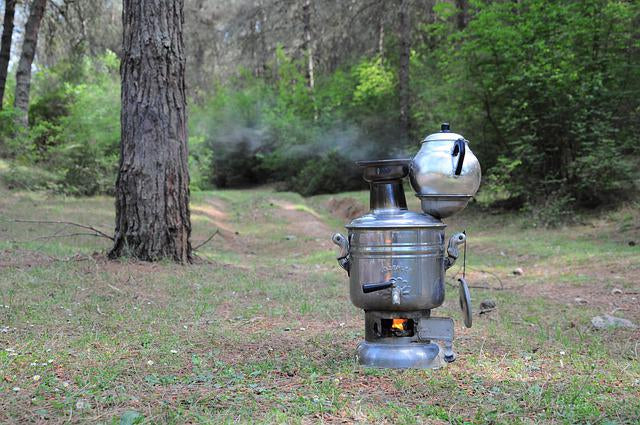
A samovar is a traditional old tea maker. The samovar originated in Central Asia, from where it travelled to Europe and the Netherlands via the East India Company. Peter the Great, Tsar of Russia, encountered the samovar during his art acquisition travels in the Netherlands in the 17th century and introduced samovar culture to Russia. Russia adopted samovars as its own and incorporated them into its culture. In Russia, the samovar (самова́р, Finnish for "self-boiler") was placed in a central position in the home and was called the heart of the home. Samovars have been made from either copper or brass since at least the 17th century. The samovar's tank is filled with water. Previously, water was heated with stones or charcoal, but nowadays it's heated with electricity. On top of the samovar's lid, there is a place for a teapot, where strong tea, or so-called tea concentrate made from black tea, is brewed. Strong tea is poured from the pot into a cup, and hot water is dispensed from the samovar's tap to achieve the desired beverage strength. The industrial production of samovars began in the city of Tula by Fyodor Lisitsyn in the late 18th century. Nowadays, samovars are made of steel and run on electricity.